


New Delhi, 28 November 2026
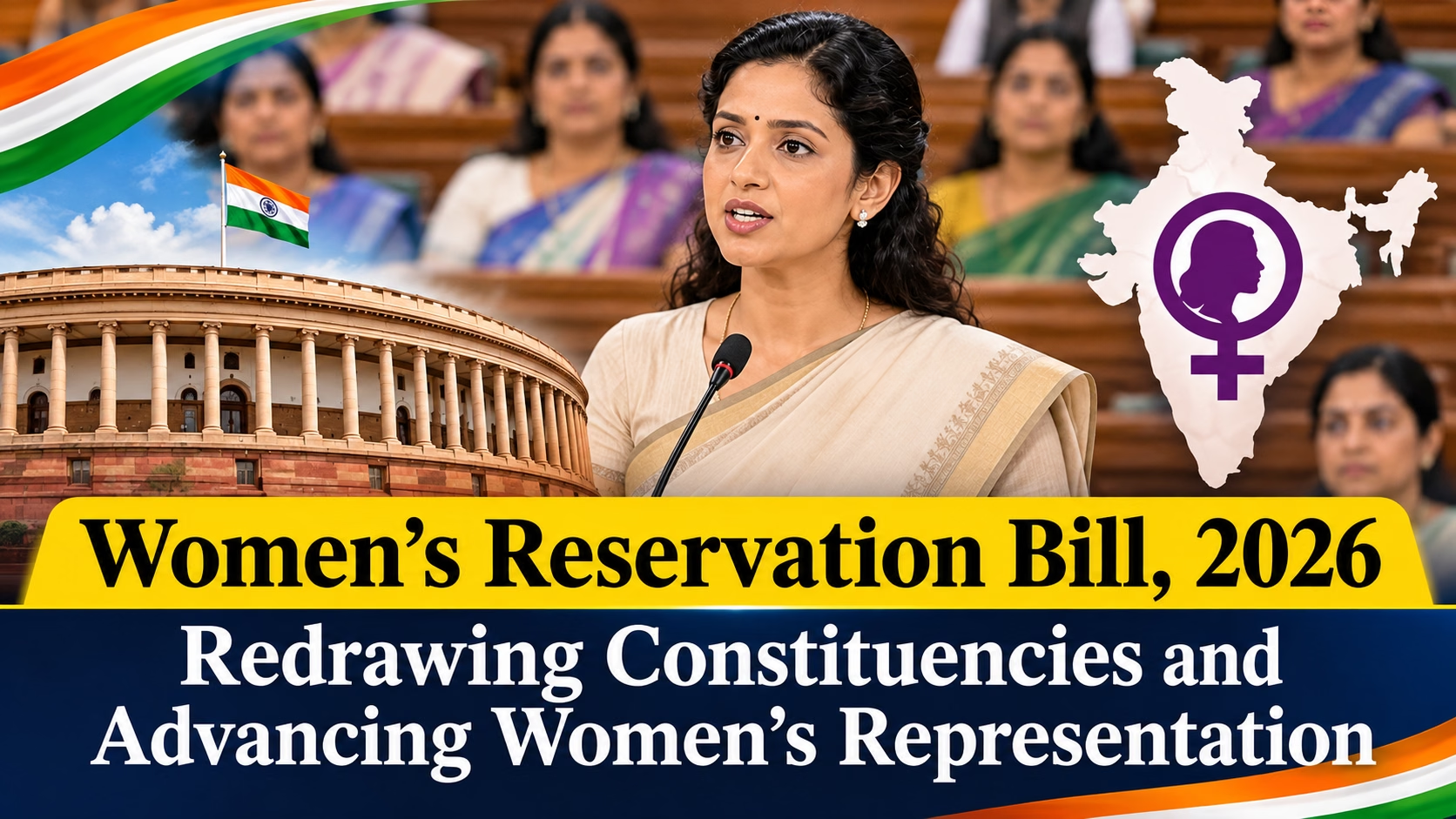
The Centre is making a second attempt to pass a constitutional amendment that would enlarge the Lok Sabha and speed up women’s reservation. The move has set the government against a united opposition, a few days before Parliament meets in a special sitting.
What delimitation is
Delimitation means redrawing constituency boundaries and deciding how many seats each state gets so that representation keeps up with population changes. Articles 81 and 82 of the Constitution provide for delimitation after every census. An independent Delimitation Commission carries it out. Commissions have been set up four times before: 1952, 1962, 1972 and 2002.
The Constitution was amended in 2002 to freeze the number of seats allotted to each state, until the first census conducted after the year 2026. The 2027 Census is that census, so the freeze is due to lift
What the bills propose
According to reports on the draft legislation, the Constitution amendment would raise the House’s ceiling to 850 members, with up to 815 from states and up to 35 from Union Territories. It would also return to allocating seats to states in proportion to their population. Parliament would get the power to decide by law when delimitation is carried out and which Census is used.
The bill also changes how women’s reservation is rolled out. It amends Article 334A so that the 33 per cent quota can take effect without waiting for a fresh Census. The aim is to have it in place for the 2029 Lok Sabha elections.
Why it’s contentious
Southern states have long worried about this. Their chief ministers fear that a delimitation following Census-2027 could reduce their representation in Parliament. The reasoning is that southern states have controlled population growth more successfully than northern ones. If seats are allocated strictly by population, the north gains share and the south loses it.
The 2023 women’s reservation law adds another layer. It provides 33% reservation for women in the Lok Sabha and assemblies. But it is tied to a delimitation after the next census. That means a Census → delimitation → reservation chain, and the government wants to shorten it.
First attempt: April 2026
- The government brought the Constitution (131st Amendment) Bill along with the Delimitation Bill, 2026. The Delimitation Bill sought to raise Lok Sabha seats from 543 to 850.
- The amendment aimed to operationalise one-third reservation for women through a delimitation based on the 2011 census.
- The amendment failed in the Lok Sabha on 17 April 2026, with 298 votes in favour and 230 against. A constitutional amendment needs a two-thirds majority of members present and voting.
- The government then withdrew the delimitation bill.
- The 2027 Census would therefore be used for the next delimitation and for women’s reservation.
Second attempt: the November 30 special sitting
Schedule. A special sitting runs from 30 November to 3 December, with the Lok Sabha meeting on 30 November and the Rajya Sabha on 2 December. The President has recommended the Delimitation (Second) Bill, 2026 for consideration in the Lok Sabha. The government is also set to introduce the Constitution (132nd Amendment) Bill, 2026.
Main proposals (reported by Business Standard and Business Today, based on the draft bills):
- A bigger Lok Sabha. The ceiling would rise to 850 members, with up to 815 from states and up to 35 from Union Territories.
- Seats in proportion to population. The amendment proposes returning to allocating seats to states in proportion to their population.
- Parliament decides the timing. A law passed by Parliament would determine when delimitation happens and which Census is used.
- Faster women’s reservation. The bill changes Article 334A, so the 33% reservation can take effect without waiting for a fresh Census. The aim is to have it in place for the 2029 Lok Sabha elections.
Where the politics stand
- INDIA bloc. Its leaders decided on 28 November to jointly oppose the bill. Rahul Gandhi has called it an attempt to gerrymander seats in the ruling alliance’s favour before 2029. The bloc is also reported to be demanding 25-year protection for states.
- Allies are split. One report says the DMK and NCP are backing the bill. Another says the DMK is awaiting the draft and is wary of the BJP’s assurances. The stance of regional parties like the DMK and YSRCP will be crucial for the government. Reports conflict, so treat the DMK’s position as unsettled.
- Government’s case. The case rests on speeding up women’s representation. The statement of objects for the earlier bill said the next census and the delimitation after it would take considerable time and delay women’s participation.

